June 2, 2026
Can India meet its nutritional needs without significantly expanding access to affordable pulses? This question was at the center of the former NAFED Additional Managing Director's keynote at Pulses 26.
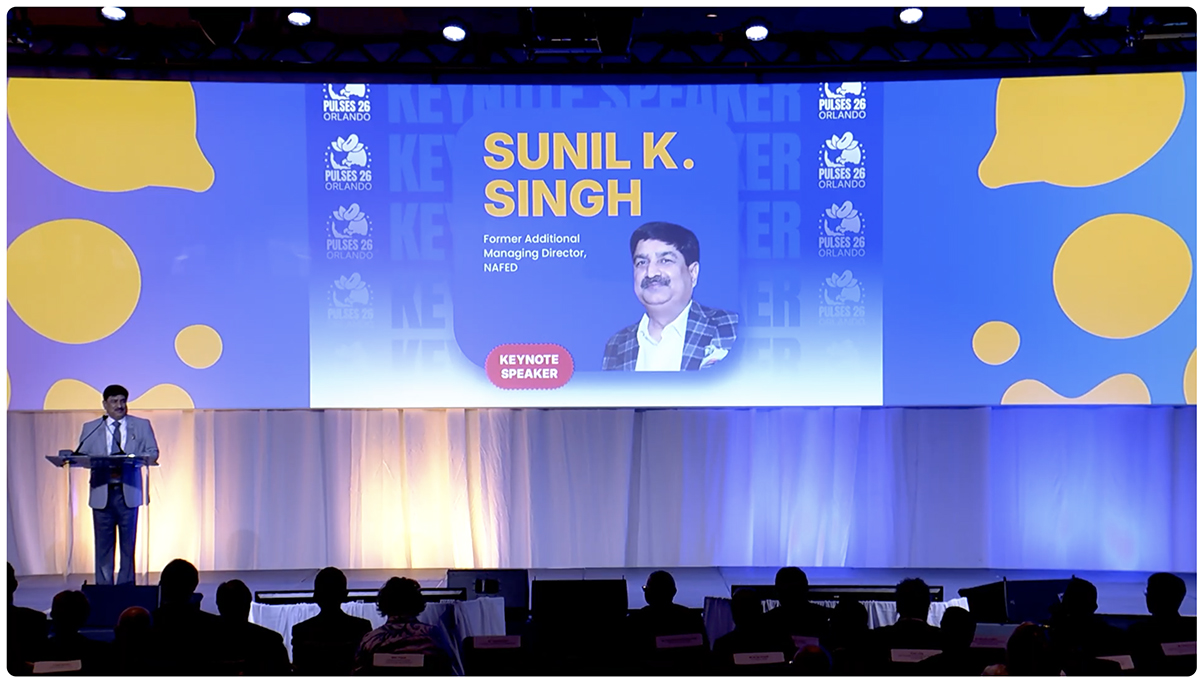
Sunil Kumar Singh’s presentation at Pulses 26 focused on the gap between recommended and actual pulse consumption in India, where pulses remain the primary source of protein for much of the population. Despite significant gains in domestic production over the past decade, he noted that current availability remains insufficient to meet nutritional requirements, while affordability and accessibility continue to limit consumption among lower-income households.
Singh also examined the role of government policy in expanding pulse access, highlighting India's growing buffer stocks, state-level welfare distribution programs and ongoing efforts to increase domestic production through improved seed varieties, climate-resilient agriculture and technology adoption. While India aims to raise pulse production to 35 million metric tons by 2031, he emphasized the importance of international collaboration and trade in ensuring affordable supplies and supporting the country's long-term nutritional security goals.
View the complete keynote

Pulses 26 / Sunil Kumar Singh / NAFED / India's nutritional security / pulse affordability / India's pulse production


Disclaimer: The opinions or views expressed in this publication are those of the authors or quoted persons. They do not purport to reflect the opinions or views of the Global Pulse Confederation or its members.